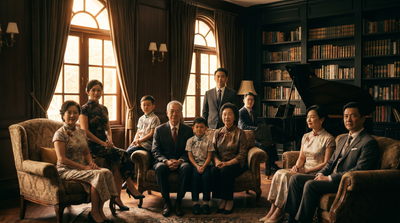

Ask someone what rich people do with their free time and you'll get the same answer every time. Yachts. Private islands. A garage full of cars they drive twice a year. That's the version that ends up on Instagram, and it's almost entirely beside the point.
The actual hobbies of seriously wealthy people are boring. Genuinely, deliberately boring. And the boring part is exactly what nobody copies.
Time Spent Reading
80%
Of Buffett's working day, by his own account
Same House
Since 1958
Bought for $31,500. Never moved out.
Munger's Rate
$20/hr
What he billed before he started selling himself the first hour of every day
Knowledge compounds the same way money does
Warren Buffett has given the same advice for decades whenever someone asks him how to get ahead. Read 500 pages a day. Not as a productivity hack. As a literal description of how he spends his time.
He's explicit about why. Knowledge builds up like compound interest. Most people understand that money compounds. Almost nobody treats their own understanding the same way, as something that gets exponentially more valuable the longer you keep adding to it without ever cashing it in.
Charlie Munger ran the same experiment on himself decades earlier, before either of them had real money. He'd go on to become Warren Buffett's business partner for over fifty years and a billionaire many times over. None of that had happened yet when he was a young lawyer billing $20 an hour. He decided his most valuable client was himself, and started selling himself the first hour of every day before working for anyone else. He used that hour to think and read, treating his own development as a billable service before he had any proof it would pay off.
Most people wait until they have money to start treating their time like an asset. The wealthy did it in reverse, and that's most of the explanation for how they got there.
Their hobbies are quietly a second balance sheet
Look closer at what the genuinely wealthy actually collect, and a pattern shows up. Watches. Wine. Art. Land. None of these are pure consumption. All of them hold value, or appreciate, independent of the stock market. That's what makes them a hedge as much as a hobby.
This isn't a vague observation. Entire indices now exist purely to track this. Fine wine, classic cars, rare watches and art are formally classed as "investments of passion," with their own benchmark performance numbers reported alongside stocks and bonds. The label exists because enough wealthy people were already treating their hobbies this way that the finance industry eventually had to build the tracking infrastructure to keep up with them.
This is the exact inversion of what most people do with spare income. A new phone every year is a hobby that guarantees a loss. A watch collection assembled with the same care as a stock portfolio is a hobby that quietly builds a second balance sheet, sitting right next to the first one.
We've made this point before
When we broke down the Royal Pop watch chaos earlier this year, the split was identical. One person bought the watch to wear it. One person bought it to flip it. Same object, completely different financial outcome, depending entirely on whether the buyer was thinking like a consumer or like a collector. The wealthy default to the second mode by habit, in every category, not just watches.
Anti-status is the actual status move
Warren Buffett has lived in the same house since 1958. He still drives himself to work. He's been photographed drinking the same brand of soda for decades and eating breakfast from the same fast food drive-through. None of this is performed humility for the cameras. It predates the cameras entirely.
Here's the part that should actually unsettle you. The people with the most capacity to buy status symbols are frequently the ones who've opted out of buying them. Not because they can't afford the watch, the car, the bigger house. Because they solved the underlying problem those purchases are meant to solve a long time ago, and never went back to needing the fix.
The uncomfortable version of this
If you're still buying things to signal status, that's not a character flaw unique to you. It's evidence the underlying need hasn't been resolved yet. The wealthy people who stop chasing status didn't get there by being more disciplined than you. They got there by actually answering the question everyone else just keeps spending money to avoid asking.
Three Hobbies, Three Transferable Lessons
Reading
Knowledge compounds the same way money does. The habit costs nothing and is available starting tonight.
Collecting
Choosing slow, appreciating hobbies over fast, depreciating ones turns leisure into a second asset class.
Restraint
Opting out of status purchases once the underlying need for validation is actually resolved, not performed for an audience.
Here's the uncomfortable part. None of these three habits require capital. Reading 500 pages doesn't cost anything you don't already have sitting inside your day. Treating a purchase as an asset instead of a consumable doesn't require a higher salary. Walking past the thing that would impress people who don't matter to you doesn't require a trust fund.
It was never really about being rich enough to have the hobby. The hobby, practiced for long enough without the money, tends to be most of how the money eventually shows up.
Ascendant Collective
The financial truth nobody taught you.
Real psychology. Real patterns. No recycled motivation. Free, every week, for the ones who want to think differently.
Subscribe Free
Subscribe to our newsletter.
Become a subscriber receive the latest updates in your inbox.